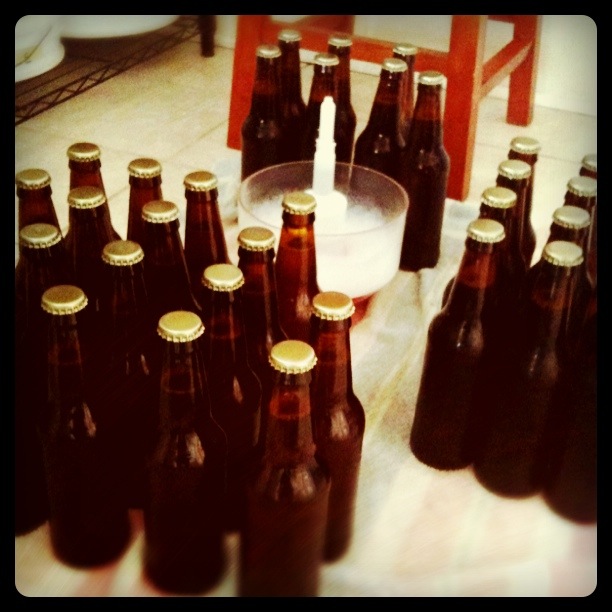
Carrot pLambic


As the title suggests I brewed a carrot beer. A couple months ago I made a small one gallon test batch (50/50 wort/carrot juice by volume) and fermented it with American ale (dry) yeast to see what a carrot beer would even taste like first. The finished beer was very earthy, slightly tart, and orange. At a rate of 50/50 by volume of wort and carrot juice it was a little absurd but it allowed me to fully understand the impact of carrot sugars in a fermented beverage. I could see carrots working in many styles such as saison, Belgian white, Gose, and Berliner Weiss. Or even something malty with many carrot wine recipes having a rum raisin or even pumpkin pie like spice blend why not try other orange vegetables such as butternut squash, carrots, sweet potatoes and yams in fall seasonal beers and not just pumpkins.

The direction I'm taking with this batch though is a bit more wild, pitching Wyeast 3278 Belgian Lambic Blend. Accentuating the earthy and tart flavors the carrot juice provided. This was the third part of a split batch of golden wort that also produced pineapple wild ale and a tropical wild ale.

Recipe: Pale malt, Flaked Oats, Wheat malt, Flaked Barley, Flaked Maize, and CaraPils. Bittered with whole leaf centennial. Fermenting with Wyeast 3278 Belgian Lambic Blend. 80/20 wort/carrot juice by volume.

Tropical Wild Ale

As part of the split batch discussed in the pineapple wild ale post this fermentor had a tropical juice blend added to primary and was dosed with brettanomyces lambicus and brettanomyces bruxellensis. The juice "Morning Blend" consisted of pineapple, apple, orange, pear, peach, papaya, and grape. When using juices for brewing I prefer to use natural and/or organic juices that are free from growth inhibitors (chemicals added to any food to prevent/ward off spoiling) that may kill the yeast and not allow the wort to ferment.

Recipe: Pale malt, Flaked Oats, Wheat malt, Flaked Barley, Flaked Maize, and CaraPils. Bittered with whole leaf centennial. Fermented with a blend of brettanomyces strains.

Pineapple Wild Ale

One way to stretch a brew day is to brew a big batch of lower gravity wort and split the batch between smaller fermentors and add a different twist to each fermentor (or keep one for a control). Whether it's using different yeast strains or adding different ingredients such as spices or fruit to the different fermentors it's a great way to experiment.

For this batch I brewed a large volume of golden wort with a starting gravity of 12.6*P (1.051sg) and split the batch three ways. One fermentor with pineapple juice, another with carrot juice, and a third with a tropical fruit juice blend. Pitching different blends of wild yeast strains into each fermentor. This pineapple wild ale is fermented with brettanomyces lambicus and brettanomyces bruxellensis.

Brewing alternative yeast beers has been a lot of fun. The only drawback is the much longer learning period per batch. More traditional yeast fermentations have much quicker turnarounds allowing the brewer to evaluate the beer much sooner. Thus learning more rapidly about brewing. No matter what the size of a batch a brewer learns something from every batch to make the next one even better.

Currently I now have sixty five gallons (would only fill one oak barrel) of beer in eighteen fermentors at different stages of souring with the oldest being one at the time of this post. Tasting along the way as the flavors have developed and matured has been fascinating. Beginning to understand when flavors start developing and the impact of different ingredients and what they contribute to the overall impression of each batch. All while being amazed at the visual seemingly big bang theory like primordial growth of a pellicle reminds me of the deeply interwoven history of humans and fermentation as food preservation for survival.

Recipe: Pale Malt, Flaked Oats, Wheat Malt, Flaked Barley, Flaked Maize, CaraPils. Bittered with whole leaf centennial. Fermented with a blend of brettanomyces strains.

Best in Show Brown Porter

Whenever someone asks me what my favorite style of beer is my response is always, "a brown ale". Quite simply the toasted and lightly roasted malt flavors balanced with a light hop flavor is what I crave to drink everyday. Looking back at my blog over the last (almost) three years I've brewed eight different brown ales using everything from buckwheat and wild rice to ancho chilies and chicory.  The first batch of home brew I ever brewed (September 8th 2006) was an English Brown Ale kit, five years later this post represents my 163rd batch of home brew on my journey to understanding the art and science of brewing. This brown ale sits at the intersection of brown and porter.

For the Tap Vermont tasting I presented this beer as, "An English inspired brown ale brewed with an array of specialty malts creates a garnet, russet colored ale with a biscuit, toffee, and chocolate flavor and aroma. Brewed with a new hop variety, Delta, an American grown descendant of traditional English hop varieties that lends an earthy backdrop for this toasty, malty, Mild."

Briess Pale Malt
TF Brown Malt
Aromatic Malt
Flaked Barley
TF Crystal 45
TF Pale Chocolate

mash 154*f

Super Galena    :60   pellet   
Delta                :10   pellet

12.7*P (1.051sg)
Safale US-05

Judging
Aroma
#1- Roast and toasted malts up front. A little over the top. No hop aroma. No DMS. No diacetyl. Low fruity esters. No alcohol.
#2- Heavy roasted malts with toasted malts. No hop aroma.

Appearance
#1- Dark amber. Clear. Dense tan head with good retention.
#2- Good color with persistent head. Off white to tan in color.

Flavor
#1- Chocolate malt. No hop flavor. Low bitterness leaves a malty barely sweet finish, well balanced for a Brown Porter. Some caramel, bit of toast. No DMS. No diacetyl.
#2- Chocolate malt appears to dominate with caramel malts balancing out the chocolate. Medium to low bitterness with low hop flavor.

Mouthfeel
#1- Medium body and mouthfeel
#2- Appropriate body to style with no alcohol. No astringency. Carbonation is great.

Overall Impression
#1- Very drinkable well made example of a Brown Porter. Roast/toasted malts a bit high in aroma otherwise no problems. Just a hint of added bitterness and some hop flavor would add to depth of character.
#2- A well made brown porter. Balanced nicely with the malts. Drinkable, maybe increase hop flavor a tad but otherwise well made.

#1- Grand Master IV  39/50
#2- Non-BJCP           37/50

Overall 38/50---Excellent (38-44)

1st Place in category winning Best in Style also
Winning Best in Show at the Delaware State Fair Home Brew Competition

Needless to say I was ecstatic, elated and down right excited with the results. Next batch I'll up the ten minute hop addition to bring more "depth of character" as one judge said. The two hundred and fifty dollar prize is nice but the real joy is in my creation being blind tasted and judged to be the most delicious beer on that particular day (over 200+ beers entered). A priceless pat on the back for the work I've put in over the last five years burning the candle on both ends brewing ridiculous amounts of research and development batches at home while brewing professionally by day. 

The judges thought my Saison was...meh

The previous post in the To Style Series I discuss how I entered an Oatmeal Stout in two similar categories (dry stout and oatmeal stout) with surprising results. Well, I did the same thing with this next batch of beer. I brewed a 'Saison' and entered it as such in category 16c but I also entered it as a Belgian Pale Ale into category 16b. It's been an educational experience thus far doing this To Style Series of batches/posts, outlining recipes, posting feedback from judges, and critically thinking about how to improve subsequent batch's of beer.

This beer was also served at the first tasting for my brewery in planning as "Vernal Equinox: A farmhouse inspired ale traditionally brewed in the Francophone region of Belgium This style is quickly becoming a favorite of American Craft beer drinkers and brewers. This beer is brewed with barley, rye. wheat, and oats creating a bready background. With whole leaf east kent golding hops providing balanced bitterness and flavor, rounded out with whole leaf Czech saaz hops for aroma. The unique saison yeast lends a peppery, fruity, almost tropical fruit aroma and flavor. A complex, aromatic, thirst quencher."


Saison
Best Malz Pilsner      47%
Rye Malt                  20%
Wheat Malt              14%
Flaked Oats              8%
Munich Malt              7%
Cara Pils                   3%
Acidulated Malt         1%

mash 154*f

EKG     1 oz.     first wort   whole leaf
EKG     1 oz.      :60           whole leaf
Saaz      2 oz.    whirlpool   whole leaf

13.2*P (1.053sg)
Wyeast 3711 French Saison

Judging
Entered in Category 16c Saison
Aroma
#1- Orange peel? Feel like maybe a wit crossover.
#2- Fruity - lemon and spicy phenols and and citrus

Appearance
#1- Great color, clarity appropriate for style
#2- Straw color with slightly hazy clarity. Nice small bubbles. White head on side of glass.

Flavor
#1- Slight astringent hop flavor
#2- Soft malt with hoppy and slight sour, astringent finish. Bitterness is high.

Mouthfeel
#1- Carbonation high but works
#2- Light to medium body, with good carbonation. Crisp.

Overall Impression
#1- Balance could have been better between malt/phenol/spice.
#2- Good drinkable beer with no perceived faults except bitter hops make the finish astringent.

#1- Professional Brewer  27/50
#2- Certified                   27/50

Overall 27/50---Good (21-29)

Same beer entered as a Belgian Pale Ale in category 16b with same judges
Aroma
#1- Nice aroma - spicy undertones with a malt background.
#2- Malty, fruity with spicy background. More malt/biscuit as it warms.

Appearance
#1- Color is too light for style. Wish it was a little more copper to red to golden.
#2- Pale straw color. Hazy. Nice Head

Flavor
#1- Malt is enjoyable but bitterness is strong on finish.
#2- Fruity and spicy. Light malt flavor with a spicy/phenolic finish. High hop bitterness.

Mouthfeel
#1- Could be maltier
#2- Medium to light body

Overall Impression
#1- Not too bad a beer. A little darker next time with higher mash temp?
#2- Good drinkable beer. Like a mix/blend of wit and pale. Soft, drinkable beer - just not fully to style. 

#1- Professional Brewer   30/50
#2- Certified                    28/50

Overall 29/50---Good (21-29)

The hop rate is calculated to only 30 ibu's so I'm a little surprised the judges reacted to the "noble hop" bitterness that way. This beer went over very well at the tasting with some naming it as their favorite of the nine featured. I've really fallen in love with creating Saison inspired beers brewing thirteen different Saison's over the last two and a half years. Using spices, fruit, and hops to put interesting twists on the classic Saison. I have to admit I was a bit disappointed with how this beer performed. Guess I'll dial back the first wort and sixty minute hop additions to lower the bitterness. The yeast character is continuing to develop in the bottle and the bitterness is mellowing with time as I enjoyed a bottle last night.

Still trying to crack this Oatmeal Stout egg?

Stouts, especially Oatmeal stout are mysterious, full bodied, roasty, deliciousness. With this next batch for the To Style Series I brewed an Oatmeal Stout that I entered into two stout sub categories, Oatmeal Stout 13c and Dry Stout 13a. The results were a bit surprising.

Oatmeal Stout
Briess Two Row         53%
Flaked Oats               14%
Oat Malt                     7%
TF Roasted Barley      7%
TF Chocolate Malt      7%
TF Crystal 45              7%
Melanoidin Malt           5%

mash 152*f

Super Galena  :60    .5 oz.
Delta              :10      1 oz.

15.4*P (1.061sg)
Safale US-05

Judging
Entered in category 13 c Oatmeal Stout
Aroma
#1-Some coffee. Mild Roast character. Low hop aroma. Mild fruity ester. No diacetyl. Clean
#2-Roasty, Coffee, Sweet Malt.

Appearance
#1-Black color, ruby highlights, clear. Light brown head with moderate retention.
#2-Dark Brown/Black color. Good head/carb

Flavor
#1-A high level of roast character. Finish is dry from high roast level. Some malt sweetness in background. Moderate hop bitterness. Balance is toward roast but malty sweetness is not far behind.
#2-Roasty but to the point of being burnt, astringent. Don't get too much oat, silky, smooth flavor per the style

Mouthfeel
#1-Medium body. Light astringency from roast malt.
#2-Medium body. Sweet but not too creamy.

Overall Impression
#1-A very roasty yet sweet example of an Oatmeal Stout. Clean fermentation character. Try reducing roast malt addition and increasing body to bring this beer more in style. Needs more creaminess.
#2-ok, drinkable beer. A bit too much roast which leaves more of a burnt flavor vs. a silky chocolate coffee sweetness. Watch use of black malt, try de-husked dark malts instead. Mash at 152-154*f

#1-Certified  29/50
#2-Certified  25/50

Overall 27/50---Good (21-29)

Same beer entered as a Dry Stout in category 13a with the same judges.
Aroma
#1-Some roasty coffee aroma, light malt sweetness, slight fruity esters. No diacetyl. No hop aroma.
#2-Big roasty, coffee rich nose. Slightly burnt.

Appearance
#1-Black color, clear with garnet highlights. Low tan head with with low retention.
#2-Black color, opaque, tight bubble tan head with medium retention.

Flavor
#1-Moderate to high roasted malt character. Slightly burnt but not astringent. Dry, unsweetened chocolate. Clean fermentation quality. Some light fruit esters. Finished somewhat sweet with a roasty balance.
#2-Roasty malty but not as strong as the aroma was. Slightly bitter with chocolate aftertaste. Hop/malt background noticed. Smooth

Mouthfeel
#1-Medium to light body with low carbonation. Slight roast malt astringency but not overwhelming.
#2-Medium to light body. Dry finish but not too harsh.

Overall Impression
#1-A roasty, sweet, light bodied example of a dry stout. Could use a little more body. Try mashing higher. Clean well attenuated. Good job.
#2-Nice, drinkable beer. Big aroma with smooth balance with roast and malt. Might benefit from more roasty, coffee flavor.

#1-Certified 33/50
#2-Certified 33/50

Overall 33/50---Very Good (30-37)

Clearly if I want this recipe to be an oatmeal stout I must create more body. First step for next batch will be to raise the mash temperature up to 154-156*f from 152*f. I've been experimenting with Oatmeal stouts at home the last couple of years with some success but still missing the elusive full body character present in some of the best examples. At this point I think it's more than just a higher finishing gravity and it's not necessarily just oats in any form (flaked, malted, steel cut) that gives the necessary body. My next batch of Oatmeal stout will also contain some flaked barley and bumping up the melanoidin malt addition to help give the tongue something to hold onto. It also appears the roast character needs to be dialed back a little bit and/or I need to look into making water adjustments. I find it interesting that this beer scored higher as a dry stout than the oatmeal stout style I was aiming for. I think this illustrates the subtle differences in processes and ingredients that can separate styles.

Strawberry Cream Ale

Continuing the "To Style Series" with an entry for category 20 Fruit Beer. Last summer I brewed a "Farm Fresh Series" featuring locally grown and procured fruits and vegetables from my local farmers market. It was a lot of fun not knowing what I would find each weekend to brew with at the farmers market. Strolling through the season I ended up brewing a Strawberry Cream ale in May. A Tart Cherry Porter and a Blueberry Belgian ale in June and a Mixed Berry Saison in July. As summer was coming to close I brewed a Smoked Pumpkin Porter (with smoked pumpkins and not smoked malt) at the end of August. I really enjoyed coming up with the recipes for each batch based upon accentuating the farm fresh ingredients. I was also experimenting with adding fruit into primary fermentor, where most brewing text recommends adding the fruit to secondary or at bottling. For me, I enjoy my sugars fermented and adding fruit into secondary or later in the process just creates a fruit beer that is too sweet. Adding the fruit to primary fermentor didn't drive off all the delicate fruit flavors. I felt the yeast being in contact with the fruit during fermentation helped to marry the flavors of the fruit and the base beer style and created a properly attenuated beer.

For the Tap Vermont tasting I presented this Strawberry Cream ale as follows, "Strawberry Split: An experimental batch using farm fresh strawberries from my local farmer's market. A traditional style Cream ale brewed with barley malt, flaked maize, and honey malt. The beer is barely hopped allowing the flavor and aroma of fresh strawberries to shine through, and it has fruit in it, so, it's good for you". This beer of course went over very well with the women in attendance but even the guys liked it because it's still a crisp, dry beer with out being overpowered by fruit flavor. 

Strawberry Cream Ale
Briess Two Row    
Flaked Maize       14%
Honey Malt           4%

mash 154*f

Celeia   first wort    .3 oz.

13.2*P (1.053sg)
7 lbs. of Fresh Strawberries
3 sliced Bananas
White Labs WLP009 Australian Ale Yeast

Judging
Aroma
#1-Strawberries up front with some banana on the back note. Quite sweet smelling
#2-Initial aroma of strawberry and banana. Light hay, straw, and meal malt. No hops or fruity esters. Clean
#3-Strawberry is the dominant aroma but banana does emerge. Very light malt character, to be expected from a cream ale.

Appearance
#1-Crystal clear amber orange, not much head.
#2-Clear. Orange with light ruby notes. Small, fizzy head. Short to no retention
#3-Brilliantly clear. Pours low head fades fast. Light copper with reddish hue

Flavor
#1-Slightly tart banana like malt followed quickly by a wave of strawberry. Slight dryness and tartness in the finish.
#2-Hay, straw, and meal malt with lightly tart strawberries. Faint banana flavor. Light to no hop flavor or bitterness. Fully fermented with no residual sugar. Dry finish
#3-Clean, crisp with a dry finish. Nice strawberry fruit flavor balancing light malt and low hop character. Banana is very subtle and if not cited may not have noticed.

Mouthfeel
#1-Medium bodied, medium carbonation
#2-Light body. Medium-low carbonation. No warmth. Medium Creaminess.
#3-Light body with medium carbonation and overall crisp.

Overall Impression
#1-I enjoyed this. Needs a bit more maltiness from the beer to really bring some complexity. Strawberry and banana were well balanced but needs a little more to bring it together.
#2-Nice beer. This could be better with more mouthfeel, and a persistent head.
#3-Very refreshing. Fruity & crisp a nice balance between strawberry and a light cream ale. Unfortunately banana got lost. Still, a well made beer.

#1-Recognized 32/50
#2-Certified     31/50
#3-Certified     32/50

Overall 31.6/50---Very Good (30-37)

3rd Place in Category

After brewing the same seasonal beer twice in a row I really feel I'm starting to dial in this seasonal one off. The head retention issue is most likely from the pectins present in the fruit. I could use a pectic enzyme to breakdown the pectins that destroy the head but I'll probably try adding Weyermann Carafoam next time. Also, I add the bananas not for flavor per say but as a strawberry flavor enhancer and to add a creaminess to the body. This is a trick I learned from a friend, former co-worker and master mead maker Jon Talkington of Brimming Horn Meadery where the banana adds body and boosts other fruity flavors present in the liquid whether it be mead, wine, beer, melomel , or cyser's. Thus I didn't mention bananas at the Tap Vermont tasting. I've found if something is in a batch and it's not a dominate flavor then it's better to just not mention it's presence.  Keep it as a your brewer secret ingredient adding complexity and a depth to a batch. One judges comment in flavor section sums it up as, "Banana is very subtle and if not cited may not have noticed". Next up in the To Style Series is an Oatmeal Stout that I entered as a Dry Stout and an Oatmeal Stout with interesting feedback.

Robust Smoked Porter

Next up in the to style series was a beer brewed for the other smoked beer style category 22b. With this category you can basically brew any base style and add smoked malt. Judges are looking for a balance of smoke in the base style and how the smoke blends into the balance of the style. Now I enjoy the smokiest of beers ie: Schlenkerla where many of the beers have nearly one hundred percent smoked malt but many people don't enjoy drinking liquid bacon cooked in a campfire. This robust porter was brewed with only a modest amount of smoked malt accounting for 25% of the overall grist bill.

For the Tap Vermont tasting I presented this robust smoked porter as, "Test Batch #161- This robust porter brewed with traditional German smoked malt creates a background of, bacon. Before the advent of in-direct fire malting techniques all beer had a smokey character. Brewed with English barley malt, pale chocolate malt, crystal malt, and flaked barley this 19th century London inspired ale transports you to another time." People enjoyed this beer but didn't love it. Many had never had a smoked ale before and enjoyed the barbecue flavors blending with the roastiness of the robust porter.


     Robust Smoked Porter
Briess Two Row
Best Smoked Malt      25%
TF Roasted Barley      8%
TF Pale Chocolate       8%
TF Crystal 45              7%
Flaked Barley              7%

mash 152*f

Super Galena  :75   .7oz pellet
Delta              :5      1 oz pellet

15.2*P (1.061sg)
Safale US-05

Judging 
Aroma
#1-Very Roasty - coffee, dark chocolate followed by a noticeable but not excessive smokyness
#2-Heavy chocolate & roasted malt; smoke is present, layers in nose, no diacetyl

Appearance
#1-Black nearly opaque, mahogany hues, thick tan head with good retention, legs, and lace work
#2-Black, opaque beer with nice clingy brown tan head

Flavor
#1-Lots of roast malt flavor, coffee, and dark chocolate. Lingering hop flavor in finish and aftertaste.
#2-Very rich chocolate initially, then complemented by smokyness; hops hard to distinguish from overwhelming chocolate flavor. Heavily malt flavored with little yeast character; no diacetyl

Mouthfeel
#1-thin body, moderate carbonation level. Some warming from alcohol
#2-Creamy and full bodied beer with no astringency. Slight alcohol warmth.

Overall Impression
#1-Well made beer, the smoke is not excessive. The roast malt is a tad strong for me maybe reduce roast slightly or replace with chocolate or de-bittered black malt. Raise mash temp.
#2-Interesting beer, I enjoyed it. Beer would benefit from less extreme chocolate slant, unless you were looking to develop a chocolate porter. Probably needs a cooler mash temp to loosen that body some.

#1-Professional Brewer  31/50
#2-Recognized               31/50

Overall 31/50---Very Good (30-37)


2nd Place in Category 22